Sunday, December 3, 2023

The Backside

When we speak of paintings it is always the image on the recto (front) that we speak of. It has been painted over a primer so that the paint will stick to the canvas or the knots in the wood will not interrupt the flow of the paint. How often, however, do we speak of the verso (the back) of the canvas or panel. What goes on there?

An exhibition at the Museo del Prado in Madrid has taken on this question. It is called in English “On the Reverse” and will be up until March 3, 2024. I love the idea of going into a gallery where all the paintings have turned their backs on us! Some of the works are installed so that you can see the view the artist intended as well. This exhibition of one hundred works drawn from the Prado’s own collection and 29 other museums covers a span of 400 years.


As an art dealer, I had to look at the backs of pictures to see if the canvas was thin or had already been relined, or whether the stretcher needed reinforcement. There is, of course, so much more to see there. There are hints at, or explicit acknowledgment of, provenance and other surprises. Sometimes there may be a preparatory sketch or an idea for another work. Here is a work from the Prado’s own collection of “The Holy Family” by Bernard van Orley (1487-1541) together with its verso showing the artist’s elaborate inscription.


The Getty Museum shows the versos of 320 paintings in their collection pages online. There they write about what one might find like wax seals of previous, handwritten inscriptions as well as customs stamps if the picture crossed borders.

Here is a picture Diana and her Dog 1717-1720 by Sebastiano Ricci ( 1659-1734) from the show with the labels on the back - information that might be gleaned by the art detective.


A happy surprise is if you might find a preparatory sketch or a picture by a student such as this by Anibale Carracci (1560-1609) and students from the Prado.


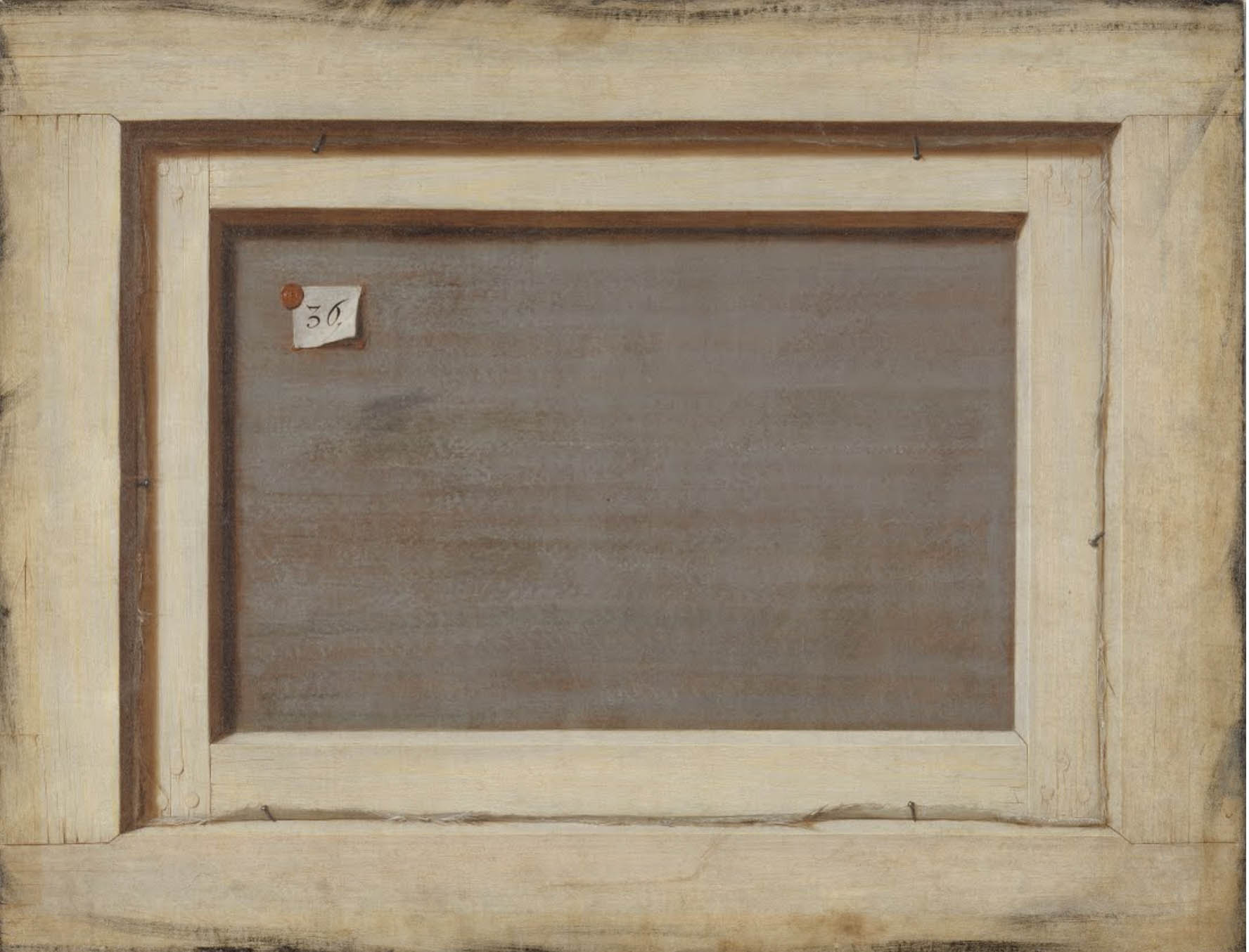
The artist Cornelius Norbertus Giesbrechts (circa 1630 – after 1683) made the verso the subject of his painting “Trompe l'oeil. The Reverse of a Framed Painting” circa 1670, in the National Gallery of Denmark. Was the artist making fun of clients or dealers who would immediately look at the back of a picture presented to them?


On Christie’s website, I found this verso of a still-life by Ben Nicholson (1894-1982). Though you may not be able to see it in the illustration the artist has included his address in Cornwall on the bottom, left.


Perhaps the most surprising painting in the Prado exhibition is by Martin Mytens (1648-1736) “Kneeling Nun” circa 1731, from the Stockholm National Museum. Mytens took the theme quite literally completing his seemingly pious frontal image with a rear view. Do note the nun peering in the window on the front whose view you only catch onto when you see the back. The picture belonged to the Swedish Ambassador to Paris who presumably kept the verso of the pious image to enjoy privately or with select friends.


The next time you want to acquire a painting you might want to take a look at the verso as well, but please make your priority looking at the recto and don’t be seduced by the verso.

Sunday, November 26, 2023

I’m Scared As Hell And Can’t Take It Anymore

My wife tells me that one of my former readers believes that I only write about politics. Yes, I have written a few Missives on politics but only a small percentage in comparison with the circa 750 I have posted since 2009.

In all good conscience, I feel I need to do it again and it always seems to be about the same issue that has only gotten much worse since 2016. Therefore, I have adapted my title from the 1976 film “Network”.

The news is full of the growth of antisemitism that is building in this country and for that matter all over the world. The fear is that “they want to replace us”. I honestly don’t understand how such a tiny minority of the world population could accomplish that? This is not a new phenomenon, and it rears its ugly head from time to time. However, this and the new republican party (no capital letters here) have reached a much scarier pitch than ever before.

I thought that nothing could get worse than when I wrote a second time about Trump over five years ago. https://www.geraldstiebel.com/2018/03/forewarned-is-forearmed-redux.html I even said that I did not think he was a Hitler, German magazines say otherwise.


In the referred to Missive there is also a cartoon showing Trump’s love of Putin. Now, however, the situation has gotten so, so much worse. A short while ago the former president and his army of acolytes started to speak of “CAMPS”. Why is that word so familiar? Oh yes, Hitler created work camps not just for Jews, though they were by far the most afflicted, but for all those he felt were inferior or a threat. In a speech in the Reichstag on 30 January 1941, Hitler claimed that the Nazis had only copied from earlier British camps, which had existed, but as you know the Nazi concentration camps became unique in one respect!


Like Hitler Trump wants to get rid of the undesirables. If you think that is an exaggeration here is the headline from CNN, “Trump plots mass detention and deportation of undocumented immigrants should he regain power”. In May Reuters wrote that if elected again “he would seek to end automatic citizenship for children born in the United States to immigrants in the country illegally” and further he “said in a campaign video posted to Twitter that he would issue an executive order instructing federal agencies to stop what is known as birthright citizenship”.


Never mind that the latter is codified in the Constitution. But he also said regarding the 2020 election “A Massive Fraud of this type and magnitude allows for the termination of all rules, regulations, and articles, even those found in the Constitution”.


We want freedom of speech but there used to be limits, such as, you can’t cry fire in a crowded theater. Now the public seems to want screaming and sensational statements. Situations have to go to extremes for the press to call it like it is, but foul rhetoric is spewed across our headlines every day while congressmen criticize social media for not policing hate speech.

I am damn right to be scared and you should be too.

Sunday, November 19, 2023

The Frick Collection’s Last Exhibition at the Frick Madison

As a writer, a number of museums grant me privileges that I wish I could make full use of. I get press notices and releases and can, at least in theory, go to press previews. Living in Santa Fe I cannot easily take advantage of many.

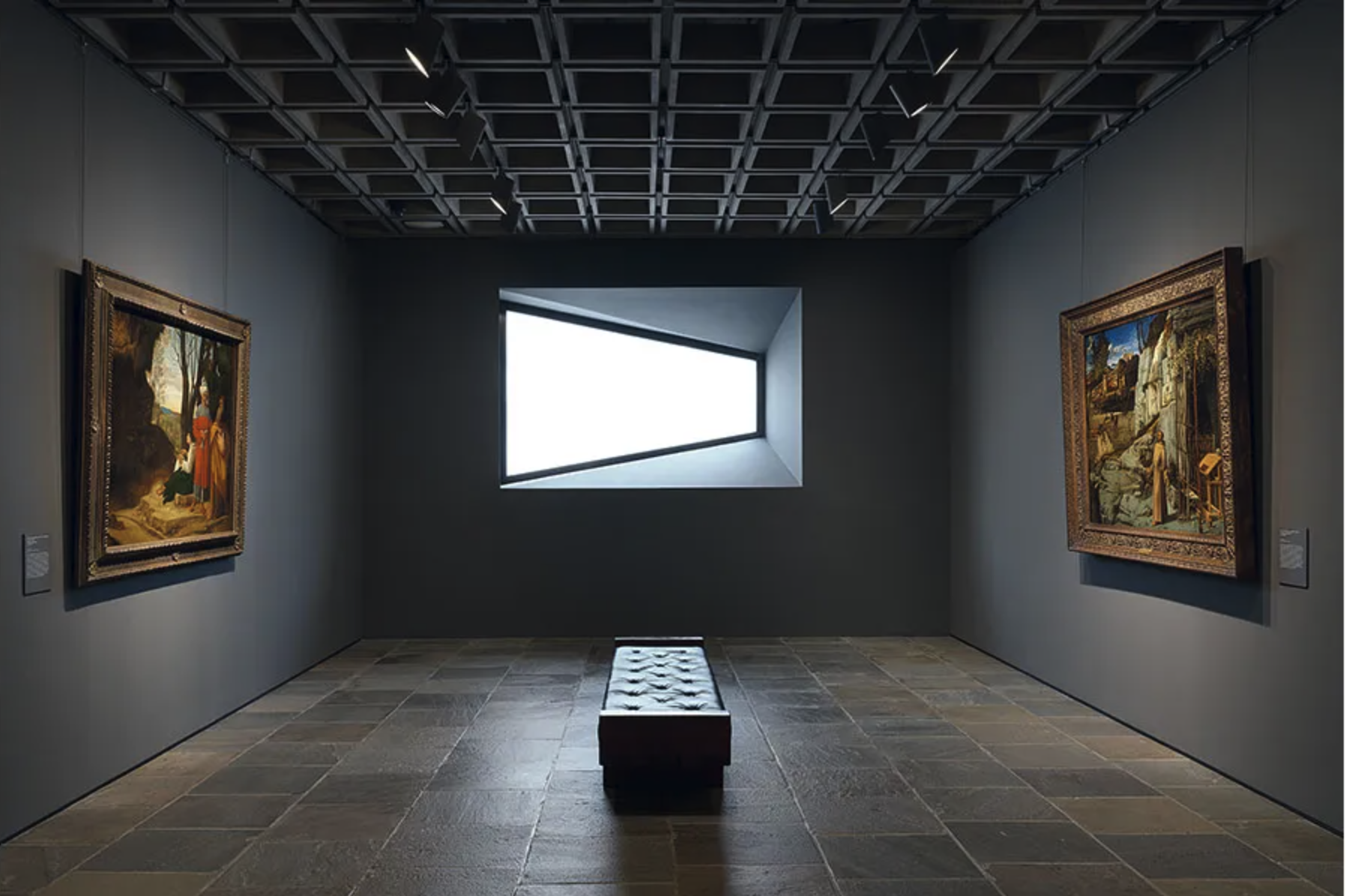
Recently I received an invitation from the Frick Collection for the preview of their final exhibition in their Madison Avenue space. By the time you read this, the exhibition will have opened. It will neither be the largest nor the most complicated they have ever done though it definitely must have been a masterstroke of International Diplomacy. The exhibition is called “Bellini and Giorgione in the House of Taddeo Contarini”.


If you have read these Missives for a while, you already know that “St. Francis in the Desert” by Giovanni Bellini (1430-1516). has been my favorite painting in the Frick, since I was a child. It is being placed “in dialog” with Vienna’s Kunsthistoricsches Museum “Three Philosophers” by Giorgione. Only six works are generally accepted by Giorgione’s hand, and it is not a common occurrence for a museum to lend a prized work of such importance. Think of the risks involved in transatlantic shipments and the concerns of having another institution dealing with one of your precious “children”. Should, god forbid, something happen to this picture that is being sent to an institution over 4,000 miles away, the political fallout alone would be seismic!


Giorgione (circa 1477/78 – 1510), is one of the earliest and most influential Renaissance painters although there is little known about him. Since he died young at 32 or 33, Giorgio Vasari (1512-1574) in his Lives of the Artists, stated that the cause was probably the plague of that period.

Giovanni Bellini painted a dozen times as many paintings. I venture that “St. Frances in the Desert” is his best and most famous. By now you are wondering, so, what do these two works have to do with each other? The answer is quite simply that they were owned by the same collector, a Venetian nobleman, Taddeo Contarini (circa 1466-1540). It is thought that quite possibly “The Three Philosophers” was commissioned by Contarini as the companion piece to “St. Francis in the Desert”. According to the Vice-Director and Chief Curator of the Museum, Xavier F. Salomon, Contarini is best known for owning these two masterpieces. Let me not forget to say that Salomon has written an accompanying book about these two masterpieces and their owner, available at the Museum and on Amazon.


The Kunsthistorisches Museum entry on their painting says that it has been seriously cut on the left-hand side. In a paper by Patrick Boucheron, he writes, “The cavern clearly once dominated the original picture, of which 20 centimeters of the left side was chopped off in the eighteenth century – which explains why the first accounts of the workplace such emphasis on the scenery.”

The many questions that surround these complex works may be illuminated either in the show or in the accompanying book. Why the title of Giorgione’s “The Three Philosophers” is accepted today though it had had other titles such as The Three Astronomers, The Three Ages of Man, and The Magi in the past. Why was the painting cut?


There are other questions regarding St. Francis. Are we viewing a “stigmatization by light,” a symbolic portrait, or Francis singing a hymn of his own composition? There is so much symbolism in the landscape. He may be in the desert, but you can see a town very nearby.


Viewing these two paintings together as their original owner did provides the opportunity to study and analyze their meaning, or simply look and enjoy two masterpieces. The exhibition will be on view until February 24, 2024, at which time the Philosophers will go home to Vienna and St. Francis will head home to his mansion on 70th Street.

Sunday, November 12, 2023

Is the Old Masters Market Dead and Gone?

From time to time there is an article like the one in the New York Times published by Scott Reyburn in January of this year. “Obsessed by the Present, Who’s Got Time for Old Masters?” The great majority of works sold by the auction houses are from this century or the last. The category of Old Master paintings, traditionally ranging from the 13th century to 1800, has recently been extended to late in the 19th century as well. I was astounded when someone said to me when speaking of Old Masters, “You mean like Picasso?”. I found it a bit absurd at the time but now I am beginning to wonder.

Life decisions are rarely made for one reason alone but rather are due to a whole lot of contributing thoughts and actions. However, in my case, the closing of my gallery, Rosenberg & Stiebel, aka Stiebel, Ltd, the primary factor was that collectors did not seem to be interested in old art anymore. I saw more and more of my colleagues going into more recent art.

When I started in the business in the mid-1960s, if you had a good Old Master painting or drawing almost every major collector and many museums came knocking on the door to take a look. Of course, there were a number of galleries with good pictures which made for a healthy market.

Today, it seems that everyone wants the newest in an iPhone or a contemporary artist’s work. I believe that to some extent it was always the case that many want to be of the moment and at the forefront of whatever is going on. Of course, in terms of art it is easier to understand and deal with what has been created here and now, rather than long ago.

Last August Artnet’s Lee Carter did an interview with Paul Henkel, who is a dealer in contemporary art and collects in that field. Although he is the son of Katrin Bellinger, the renowned art dealer, and expert in Old Master drawings, I was still surprised to learn that when asked if he could steal a work of art with impunity which one it would be, he said Caspar David Friedrich’s (1774-1840) “Two Men Contemplating the Moon” (circa 1825-30) in the Metropolitan Museum. Friedrich happens to be one of my favorite artists as well and I would put him in the Old Master category.


Needless to say, there will always be more available from the present and recent past than from centuries ago. Ergo, there are more collectors in this area.

I honestly don’t think that has changed, but what has changed is the fortunes that collectors are willing to spend on these recent works of art. While money used to be a word one spoke of quietly, today wealth is flaunted. What better way to show off than to outbid everyone in the auction room and sales of modern art offer many more opportunities.

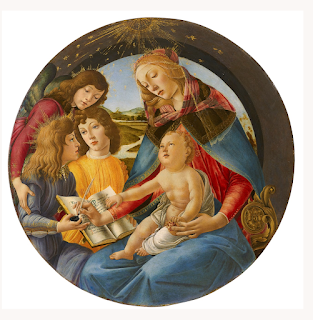
Everyone is attracted to celebrity, be it the name of the artist or the collector. Sometimes both bring added value. If you have material from a name like Rothschild everybody pays attention. In this fall’s sale at Christie's New York of works from the French Rothschilds, the highest-priced painting was Gerrit Dou’s (1613-1675) “A young woman holding a hare with a boy at a window” (ca.1653–57), which was estimated at $3 to 5 million and brought just over $7 million. At the Paul Allen, co-founder of Microsoft, auction Sandro Botticelli’s (1444/5-1510) “Madonna of the Magnificent” brought $48,480,000. My father had a sarcastic expression in German that translates, “For some people that is all the money they have”!!!



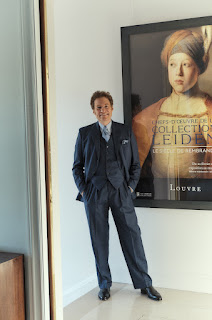
The entrepreneur and collector Thomas Kaplan (1962- ) said in an interview with Cheyenne Wehren this past March at TEFAF (The European Fine Arts Fair) that when, as a child, his mother trying to expand his horizons took him to the Museum of Modern Art he told her that he wanted to go back to the Metropolitan Museum to see the Rembrandts. When he became head of an investment firm, he figured there were no more great Old Masters to collect. In 2003, however, he happened to be seated next to Sir Norman Rosenthal, then exhibition secretary at the Royal Academy of the Arts, who encouraged him to look again. In subsequent years, with the help of some of the major dealers in the field, he built a collection of 250 Dutch 17th-century paintings and drawings. He dubbed it the Leiden Collection, after Rembrandt’s hometown. You can measure the importance of his holdings by his loans of numerous paintings to museums including the Pushkin in Russia, the Louvre, and the Met. And yes, his collection includes 11 Rembrandts and a Vermeer.

In an article in the Magazine Apollo of January 30, 2023, “How Healthy is the market for Old Masters?” Jane Morris summed it up nicely: “Perhaps it is more accurate to say that the Old Master market has remained the same while everything around it has grown. The rarity of great works by the most famous Old Masters means they can compete in value with expensive impressionist, modern, and contemporary works.”

Sunday, November 5, 2023

O’Keeffe/Moore

Last week we went down to the Albuquerque Museum to see an exhibition of the work of both Georgia O’Keeffe (1887-1986) and Henry Moore (1898-1986). This is a traveling exhibition called logically enough “O’Keeffe and Moore” originated by the San Diego Museum of Art and curated by Anita Feldman, San Diego’s Director for Curatorial Affairs.

As I have quoted a former museum director before, the art museum “is a small corner of the entertainment world”. It follows that the curators and/or director are responsible for enticing the art interested public to come for a visit. They must think of exhibitions that either show a new concept or a twist on something old to achieve this goal. Even though bringing together works by an artist like Vermeer can be a big draw, that can only be attempted once in a generation.

For the current exhibition Ms. Feldman brought together works by O’Keeffe and Moore because they “pioneered and shared a coherent vision and approach to Modernism.” She sees a common denominator between them in their reliance on found objects. I liked the fact that the exhibition centered on recreations of the artists’ studios, O’Keeffe’s in New Mexico and Moore’s in Hertfordshire, England, both filled with a number of those found objects. No need to identify which is which here.


The two artists lived and worked almost 5,000 miles apart and met only once at the Museum of Modern Art during a Retrospective of Henry Moore’s work in 1946. O’Keeffe had her retrospective there a few months earlier. Hers was the first MOMA retrospective ever done for a female artist.

I must admit I have trouble understanding what O’Keeffe and Moore have in common beyond the fact that at a time when most abstraction was geometric theirs was more organic. True they both found inspiration in the forms of bones they collected. However, the basic difference I discern in their art is confirmed in the two interviews shown in the exhibition: Moore’s work is born in his head while O’Keeffe’s comes from her gut. His is analytical while hers shows love and passion.

O’Keeffe clearly loves the Southwest and the land and feels before she paints. Here is her Black Place II from the Vilcek Collection and “Pelvis with Distance” from the Indianapolis Museum of Art.


Moore plays with forms and models in his studio. When blown up in bronze in situ, they do come alive and have a calming effect. In the show is this “Reclining Figure” (1968) in wood almost 8 feet wide, one or Moore’s working models for a work which was to be over 40 feet at I.M. Pei’s Dallas City Hall. The final work was split up so that the public could walk through it. Here is the model and an image of the final altered work in situ.


Ending on a whim this image of Moore’s “Moon Head” of 1964 in porcelain with O’Keeffe’s painting of a “Clam Shell” from 1930 in the background appealed to me. Here works by the different artists do seem to have something in common. If you don’t see what I do, join my wife!


Sunday, October 29, 2023

Keeping Indigenous Art Indigenous

What a strange title. Well, it is not mine. That is the title of an article in the October 9th issue of Bloomberg Business Week by Erin Vivid Riley. What is even more surprising is that the article centers on Santa Fe. Not that this is not an issue, but Santa Fe and its art world are not a subject usually found in an international business magazine.

Personally, I am very happy to see it. I found I did write about this subject 8 years ago in a Missive called Truth in Marketing. At that time the Mayor of Santa Fe recommended to the State Legislature a Truth in Marketing law but there has been little result.

The 1990 federal Indian Arts and Crafts Act, which addresses the issue says “It is illegal to offer or display for sale, or sell any art or craft product in a manner that falsely suggests it is Indian produced” and the penalties can be quite severe.

Unfortunately, it is rarely enforced and there are no state or city regulations against false advertising.

The issue is especially important to Santa Fe as the city depends on tourism and Native American art is a major draw, yet so many shops offer counterfeit wares.

Over half a century ago I remember a story about a Japanese town named USA where they could label their production “Made in USA”. In more recent times it is said that in China there is a town calling itself Zuni so that they can sell fetishes made at Zuni. Traditionally for the people of the pueblo of Zuni, fetishes, the small carvings made primarily from stone, have protective significance. They have also become a form of Native American art for collectors and tourists. While some made with sought-after stone like turquoise may be expensive many made by Zuni artists can be acquired for under $100.


Larry Barker of KRQE News posted a story in May of 2021 and wrote about an Albuquerque businessman with several shops of so-called Native American art. His source, however, was not the artists but rather a sweatshop in Cebu City, the Philippines which produced millions of dollars worth of fake Native American-style jewelry. They would obtain legitimate pieces make molds and reproduce the objects over and over again. Once in a while, the Feds do step in under the Indian Arts and Craft Act (IACA). At that time they arrested three people involved in selling counterfeit Native American art from the Philippines, but that is the exception, not the rule. The possible penalties are not meted out severely enough to stop the illicit market.

The fake art, especially jewelry, is often cheaper because the real thing is laboriously handmade by Indian artists who depend on that income to support their families. I don’t understand why bother coming to Santa Fe if you will settle for a fake. Do people go to Paris in order to buy rip off designer couture? If you feel that your friends won’t know the difference, why not buy online? Here are some images of the real thing.


It should not be a question of “caveat emptor” but the best way to be sure of authenticity is buying from trustworthy dealers, and there are many. Ask at the museums that exhibit Native art, not for a list that they won’t give you, but for galleries you might visit to find specifically, katsinas or ceramic pots or jewelry etc.

You can also come to Santa Fe for the SWAIA Indian Market, where, on the third weekend of August, more than 200 Native American artists gather to exhibit and sell their art. Authenticity in techniques and materials is vigilantly regulated at this event. I know that when we have friends and relatives coming to town, we are very careful to tell them which shops and galleries they can trust to sell the real thing.


Sunday, October 22, 2023

Losing a Language

My parents were German refugees, and I was born before the end of World War II. They did not want me associated with Germany, which was still the enemy, so they were determined that I be as American as possible and therefore only spoke English with me. Having lived both in England and France after escaping Germany they spoke all three languages fluently, so this was not a problem. Of course, they spoke German with each other, so I had to learn some in self defense! I have a friend who came over somewhat later and her parents did not wish her to forget Germany, so they only spoke German to her at home. Today I wish that my parents had spoken German to me, but they were right not to at the time.

I recently read a story in the Smithsonian Magazine and the National Museum of the American Indian in an article called “Waking a language from its slumber” by Kasike Jorge Baracutay Esteve. He has been a cultural activist wishing to bring back the Taino language to the indigenous people of the Caribbean. This has become an important issue to many tribes in the States as well. My first thought was … why?

A fascinating paper called “Native Language Revitalization: Keeping the Languages Alive and Thriving” by Amy M. Gannet at Southeastern Oklahoma University goes into the subject in great depth. Every other sentence is footnoted so maybe it is a Phd thesis. She says that there are approximately 7,000 languages in use today and that by the end of this century 50-90% will be extinct. Again, why is this happening?

I believe I have found a major reason as regards the Native Americans. You have probably heard about the Indian Boarding schools where the relatively new Americans wanted to “tame the savages” by teaching the Indians Anglo ways. You have maybe heard Governor Ron de Santis say, something to the effect that there was nothing here until we came. This unfortunately was, and seems still is, the attitude of many.


Native Americans have kept much of their culture alive with traditional arts and ceremonies that differ in each tribe. However, as Native languages were forbidden in Indian boarding schools and any use was punished, graduates seeing the Anglos were taking over, and many wished to have their children assimilate, which was the idea. As a result, a dwindling number of tribal elders retained fluency.

Some of the Native American Languages

In 1990 Congress passed the Native American Languages Act (NALA) to allow the use of Native American languages as a medium of instruction in schools giving the children the right to express themselves and be educated in their native language. In 2006 Congress went further enacting the Esther Martinez Native American Languages Preservation Act to help keep Native American languages alive through language immersion programs.

Language is part of cultural heritage. An element of understanding is lost in translation, particularly in imparting stories of the past where words have no modern equivalent. Even though Latin and ancient Greek lie at the root of modern Western languages and continue in scientific vocabulary their study has been dropped from the school curriculum. Only specialized scholars can access the great works of Socrates, Plato, Aristotle, and Homer in the original. Per example

A fragment of the second book of the Elements of Euclid, the ancient Greek mathematician, was discovered in 1897 at Oxyrhynchus, Egypt.


My wife speaks French fluently and can get along in Spanish. I can get along in French and German though the latter is better. Obviously English is our native language yet there are certain words and phrases we say to each other in another language because their exact meaning cannot be translated. Here is a simple expression, “attention”. It is even the same word in English but in French, it might be said to someone as a warning, ie watch out if there is a step or other hazard ahead.


Bringing back all languages that are dying out may not be possible but for those that can be revived an important understanding of history and identity can be passed on to future generations.